In the span of a single week, Anthropic shipped Claude Opus 4.7 and Claude Design. This is not a chatbot company trying to win search or build an ad network. This is a company building the connective tissue of how teams actually do work.
For marketers, that shift matters more than the release notes suggest.
The market’s first read was not kind
Before getting into what the products do, it’s worth looking at how the market reacted. Figma dropped 7% on the day Claude Design was announced.
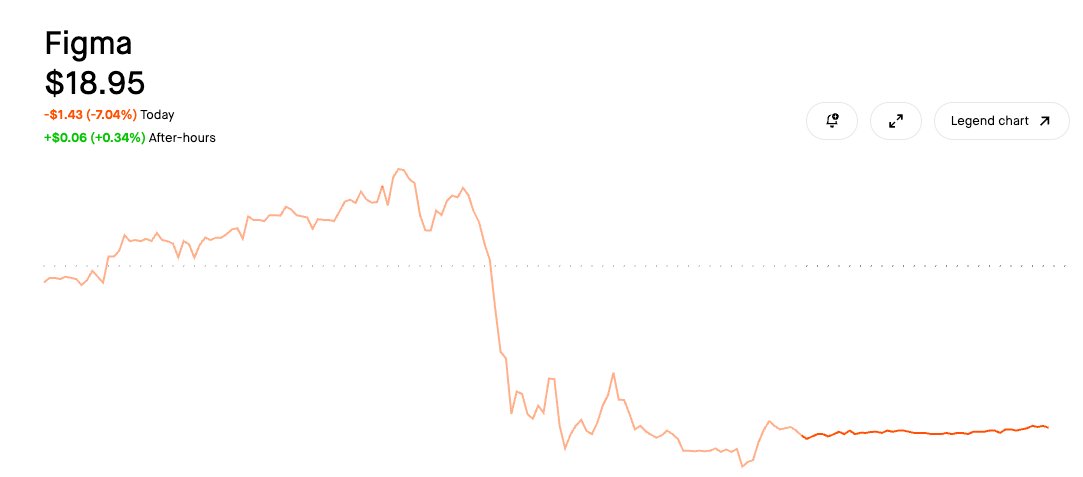
That reaction tells you something the press release doesn’t. The market believes Claude Design is real enough to matter. Whether it eats into Figma’s territory or simply shifts where design happens earlier in the process, investors clearly see overlap. Design tools have been one of the most defensible SaaS categories of the last decade. A single research preview from Anthropic was enough to move the stock.
Keep that in mind when you read the rest of this.
Opus 4.7: a sharper tool that needs a sharper operator
Every’s Katie Parrott tested Opus 4.7 the day it shipped, and the headline from their review is telling: the model stopped reading between the lines.
Opus 4.6 was doing a meaningful amount of prompt engineering on your behalf. It filled gaps, inferred intent, and guessed what you probably meant. Opus 4.7 does less of that. With a detailed brief, it produces the best results Every has seen on their coding benchmarks and, in their words, consulting prose that one tester called better than reading their own. With a loose brief, it hedges or stalls.
A few things from the Every review that marketers should pay attention to:
The model self-verifies. It reviews its own output against the original request before reporting back, catching logic errors mid-plan without being asked. That pattern has been a prompting trick for a year. Now it’s baked in.
Vision is three times the resolution of previous Claude models. This is the quiet update that makes Claude Design possible. It’s also the update that makes Opus 4.7 meaningfully better at generating PowerPoint decks, reviewing landing pages, and catching the kind of off-by-a-few-pixels layout issues that used to require a human eye.
There’s a new effort level called “extra high.” It sits between “high” and “max” and is the default in Claude Code. For anyone doing async work like monthly performance analyses or multi-hour agent tasks, this is the setting you want.
The practical takeaway for marketers: your prompt library needs a refresh. The prompts you tuned on 4.6 will give you disappointing results on 4.7 until you rewrite them with more explicit acceptance criteria, constraints, and cadence. The model is listening for permission that 4.6 took for granted.
Claude Design: prototyping without the learning curve
A day after Opus 4.7 shipped, Claude Design arrived. It’s an Anthropic Labs product powered by Opus 4.7’s vision capabilities, available to Pro, Max, Team, and Enterprise subscribers.
Here’s what the interface looks like:
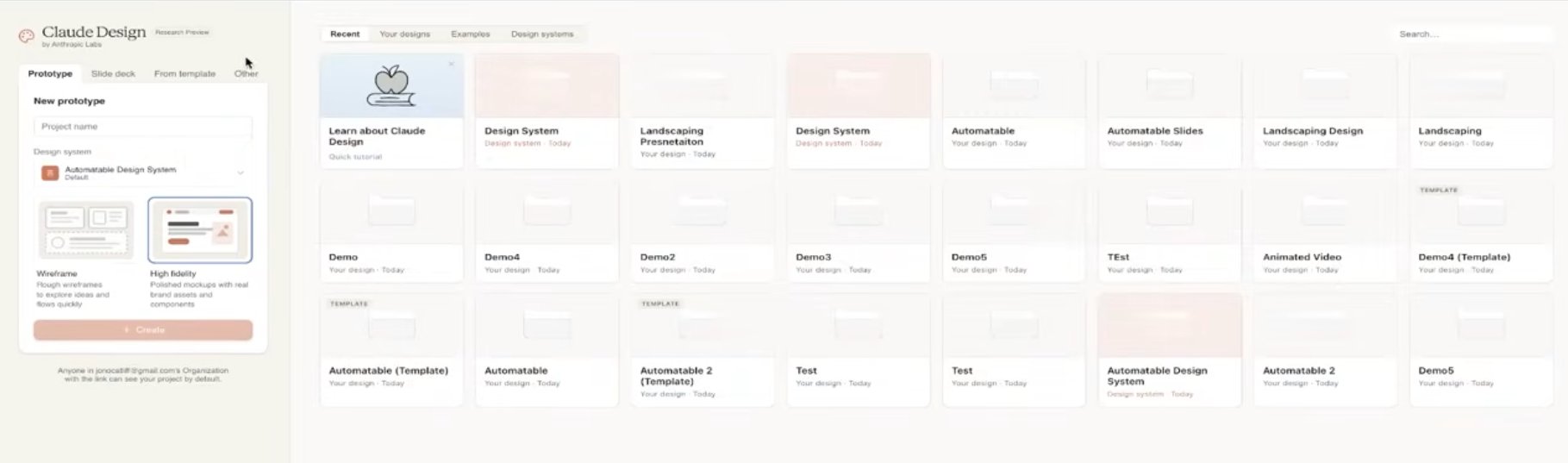
The feature list reads like a product manager’s wishlist. Realistic interactive prototypes without code review. Product wireframes that hand off to Claude Code for implementation. Pitch decks generated from a rough outline, exportable to PPTX or Canva. Landing pages and social assets with your brand system applied automatically. Claude can read your codebase and design files during onboarding to build a design system that persists across every project after.
Canva and Datadog are already using it. Datadog’s PM said what used to take a week of back-and-forth between briefs, mockups, and review rounds now happens in a single conversation.
Context engineering is becoming the whole game
Look at the onboarding screen for Claude Design:
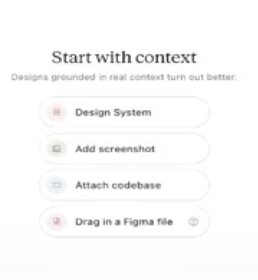
Designs grounded in real context turn out better.
That sentence is the thesis of how Anthropic is shipping products right now. The same principle that makes Opus 4.7 a sharper tool with a sharper operator applies to Claude Design. The quality of the output is a function of the quality of the context you feed it. Your design system. Your screenshots. Your codebase. Your Figma files.
For marketers, this is the skill that separates the ones who get outsized leverage from AI and the ones who stay stuck generating mediocre asset variations. Context engineering is becoming a real discipline. It looks like maintaining a clean brand system. It looks like structured briefs. It looks like skills and system prompts you reuse across campaigns instead of typing the same instructions into a blank chat every day.
If your team is still treating AI as a one-off productivity tool, you’re going to fall behind the teams building it into their operations.
Where this is actually heading
Step back from the individual releases and look at the shape of what Anthropic is building.
Claude Code for developers. Claude for Excel, Word, and PowerPoint for operators. Claude Cowork for desktop file management. Claude for Chrome for browsing agents. Claude for Slack for team communication. Claude Design for visual work. Skills and connectors that tie all of it to the tools teams already use.
This is not a direction toward an AI search engine. There is no ad network forming. Anthropic has said as much publicly, and their product roadmap backs the statement up.
The direction is toward an everything app for work. Not a consumer product with ads sold against attention. A collaboration layer that sits between your team and the tools you already pay for. Figma, Canva, Google Drive, Slack, Notion, your codebase, your CRM. Claude connects to those tools and helps your team produce the output they were going to produce anyway, with less friction.
That’s a fundamentally different business model from the one Google and Meta have built their empires on.
What marketers should do about it
Three things worth doing this quarter.
- Audit your prompt library. If you’ve built reusable prompts, skills, or system instructions on Opus 4.6, they need a refresh for 4.7. More explicit briefs. Clearer acceptance criteria. Less inference, more instruction. The models are moving toward users who can specify exactly what they want, and marketers who can brief tightly will get dramatically better output than those who can’t.
- Get your context in order. Your brand guidelines, your ICP documentation, your product messaging, your design system. Anything you’d hand to a new hire on day one should be living somewhere Claude can read. This is not documentation for its own sake. It’s infrastructure for every piece of content, ad, deck, and landing page you’ll produce from here forward.
- Stop thinking about AI as a tool for individual productivity and start thinking about it as infrastructure for how your team operates. The companies getting real leverage from Claude right now are the ones treating it as a teammate with access to their systems, not a chatbot that lives in a tab.
Opus 4.7 and Claude Design in one week is a product drop. What it really is, is Anthropic telling you where the workplace is heading. The companies paying attention will be two years ahead of the ones that aren’t.